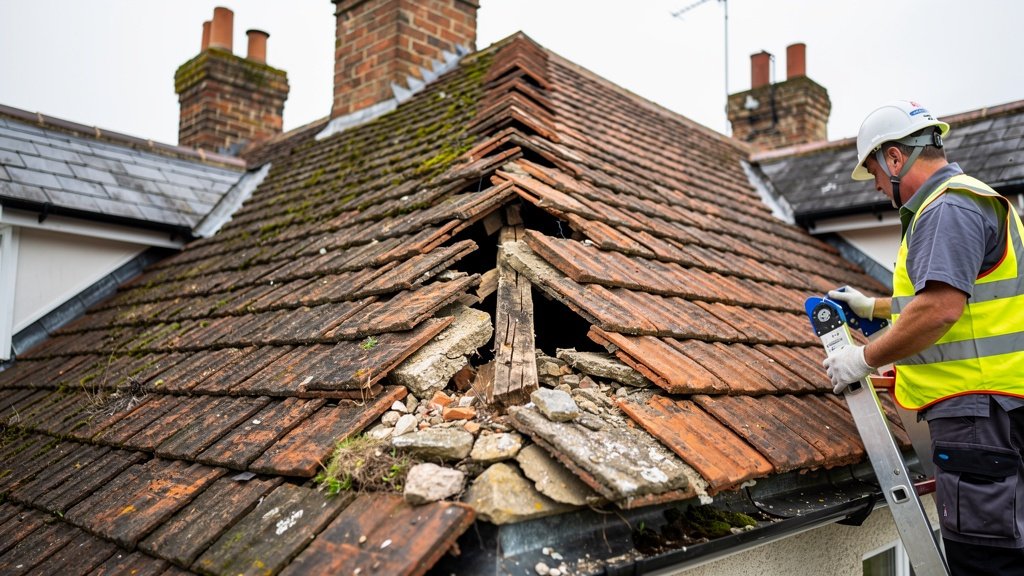
In my 20 years of building surveying across West Sussex and Surrey, if there's one part of a property that consistently surprises buyers with its repair cost, it's the roof. I've seen relatively modest-looking properties where the roof issues alone ran to £20,000 or more. I've also reassured plenty of anxious buyers that what looked alarming was actually a straightforward, inexpensive fix.
The key is having someone who knows what they're looking at. Here's what I look for when I assess a roof — and what it means for buyers in Crawley and across the wider West Sussex area.
Roof Types in West Sussex Properties
The type of roof covering varies considerably by era:
- Clay plain tiles — very common in Victorian and Edwardian properties. Excellent longevity but individual tiles can slip, crack or spall. Original clay tiles often need no wholesale replacement, just maintenance.
- Concrete interlocking tiles — standard in 1970s–90s housing in Crawley. These typically have a lifespan of 30–50 years. Many are now reaching the end of their life.
- Natural slate — found in older, higher-value properties. Premium material with excellent longevity, but ridge and hip mortar bedding typically needs attention every 20–30 years.
- Felt and mineral capsheet — flat or near-flat roofs on extensions and garages. Shorter lifespan of 15–25 years. Many are past their replacement date.
- Single-ply membrane — modern flat roof covering with much better longevity. If an older property has had its flat roof replaced in the last 10 years, it may well be single-ply — worth confirming.
What I Look For During a Roof Survey
My roof assessment starts before I even enter the property — I assess the external roof covering from ground level using binoculars as standard. I look for:
Tile and Slate Condition
Slipped, cracked, broken or missing tiles are the most obvious concern. Single replacements can be surprisingly expensive if matching materials are no longer manufactured. I also look at the overall pattern of the roof — does it look uniformly laid? Are there any areas of obvious repair that suggest ongoing problems?
Ridge and Hip Condition
The mortar bedding that secures ridge tiles tends to be one of the first elements to deteriorate. Failed ridge bedding can allow tiles to shift in high winds, potentially causing damage to the roof covering and water ingress. On many West Sussex properties of 1970s–90s construction, ridge re-bedding and re-pointing is a recurring maintenance requirement.
Chimney Stacks
Chimneys are frequently a source of water ingress. I look at the mortar haunching around the chimney pots, the pointing to the chimney stack itself, and critically the lead flashings where the chimney meets the roof slope. Failed flashings are one of the most common causes of damp to upper floor walls and ceilings.
Gutters and Downpipes
Blocked, misaligned or failed gutters are one of the most common causes of damp to upper walls. On older properties, original cast iron guttering is often corroded, blocked with debris or has failed joints. This isn't always a major expense to fix, but if left unchecked it causes damage that is.
Inside the Roof Void
Where accessible, I inspect inside the roof space. I look for evidence of past or current water ingress (staining on rafters and sarking felt), the condition of the roof structure itself, ventilation (or lack of it — poor ventilation causes condensation which can damage timbers), and evidence of timber beetle or rot.
What Does Roof Repair Cost in West Sussex?
Typical Repair Cost Ranges (2026)
| Ridge re-bedding and re-pointing | £800–£2,500 |
| Lead flashing replacement (chimney) | £400–£1,200 |
| Gutter replacement (full house) | £800–£2,000 |
| Flat roof replacement (extension) | £3,000–£8,000 |
| Full concrete tile re-roof (3-bed semi) | £8,000–£15,000 |
| Full natural slate re-roof (3-bed semi) | £12,000–£20,000+ |
Using Roof Issues to Negotiate
If our survey reveals significant roof issues, you're in a strong position to negotiate. A well-costed schedule of repairs — which our survey reports provide — gives you a factual basis for requesting either a price reduction or remediation before exchange. See our guide to renegotiating after a building survey for practical tips.
"Never dismiss roof issues as 'just maintenance'. What looks like a few slipped tiles can be the tip of a much larger iceberg. Get the full picture from a surveyor before you commit."