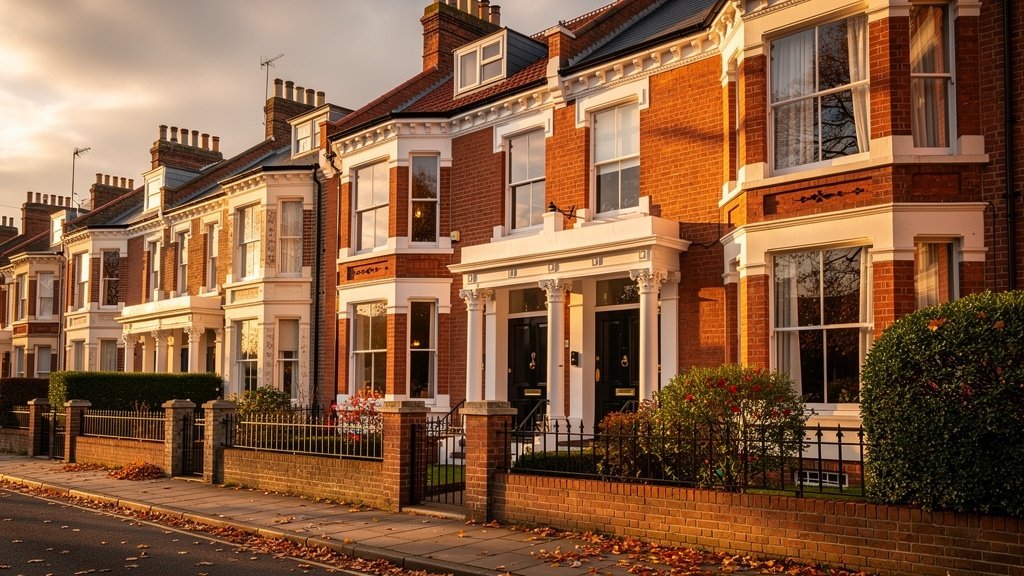
There's something genuinely special about Victorian properties. The craftsmanship, the character, the solid brick construction that's outlasted almost everything built since — I understand completely why buyers are drawn to them. But as a surveyor who's inspected hundreds of Victorian properties across West Sussex and Surrey, I also know that they come with specific challenges that buyers absolutely need to be aware of.
If you're buying a Victorian house in Horsham, Three Bridges, Horley, Brighton or any of the other towns and villages across West Sussex and Surrey with significant Victorian housing stock, here's what to expect from your survey — and what to watch for.
Victorian Construction: What Makes It Different
Victorian properties (broadly 1837–1901, though many are described as Victorian even if built slightly later) were built using methods that are fundamentally different from modern construction:
- Solid brick walls rather than modern cavity wall construction — walls are single-skin, usually 9 inches (two bricks) thick, without a gap between inner and outer leaf.
- Lime mortar rather than modern cement mortar — more flexible, breathable, and self-healing in minor cracks, but deteriorates over time and needs maintenance.
- No damp-proof course in most cases, or a basic slate DPC that may now be bridged or failed.
- Timber suspended floors — ground floor joists sit above a void, which must be ventilated to prevent decay.
- Original single-glazed windows in many cases, or replacement windows that may not match the character of the property.
What We Typically Find in Victorian Properties
Damp
Damp is the single most common finding in Victorian properties across Sussex. The solid brick construction means these buildings are designed to absorb and release moisture — they 'breathe'. Problems arise when breathable lime plaster and mortar are replaced with impermeable cement renders and plasters that trap moisture in the walls. Rising damp from ground level is also common where DPCs are absent or have been bridged by raised external ground levels.
Roof Condition
A Victorian property in excellent condition might still have its original clay plain tiles, which can last 100+ years if maintained. But the ridge tiles, valleys, flashings and guttering are often in poor condition. Many properties also have rear flat-roofed extensions added in the 20th century that are now at or past end of life.
Timber Decay and Woodworm
Historic common furniture beetle infestation is almost universal in Victorian properties. Whether it's active or historic matters — and requires expert assessment. Wet rot in window frames, sills and external joinery is also very common.
Structural Settlement
Most Victorian properties have settled over 100+ years and show some degree of historic movement. Distinguishing between normal, stable historic settlement and active, ongoing movement is a core skill for an experienced surveyor. In Sussex, Victorian properties on Weald Clay or other shrinkable soils require particularly careful assessment.
Services
Victorian properties often have original or partially updated services. Lead water supply pipes, early plastic or copper internal plumbing, older electrical installations with fuse boxes and limited sockets — all need professional inspection and often replacement.
Do You Need a Full Building Survey?
Without question, yes. A Full Building Survey (Level 3) is the appropriate survey for virtually all Victorian properties. A HomeBuyer Report simply doesn't provide the depth of investigation and commentary needed to properly assess a property of this age and construction type. Don't let cost be the deciding factor — a few hundred pounds difference between survey types is trivial relative to the potential cost of undiscovered issues.
Should You Buy a Victorian Property?
Yes — with your eyes open. Victorian properties require more maintenance than modern ones, but they offer a quality of construction and character that many modern homes simply can't match. The key is going in informed, with a realistic budget for maintenance and any repairs identified in your survey. A good full building survey will give you exactly that information.
"Victorian properties reward informed buyers. Know what you're buying, budget accordingly, and you'll have a home that will outlast anything built in the last 50 years."